Culture in Antalya

On this page, you will find a cultural guide to Antalya, uniting all the important elements of Antalya’s unique cultural traits.

The city of Antalya looks back on 6,000 years of history, some of whose heritage has been well preserved, and some not.

Ancient ruins and the beautiful old town of Antalya are some of the witnesses to a long-gone era.

Also, throughout the surrounding province you can find numerous traces of ancient and ottoman culture, as well as todays Turkish culture.

Cuisine in Antalya
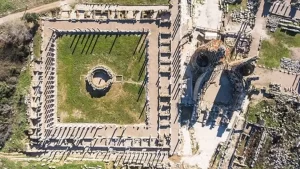
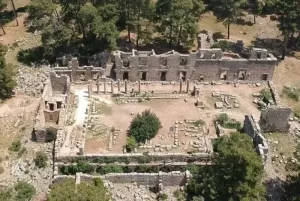
Famous Ancient Ruins
Historical Buildings
Museums in Antalya

A Short Historical Guide of Antalyas City Center

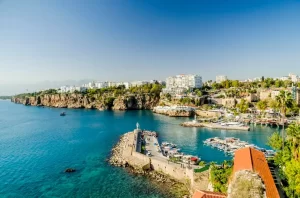
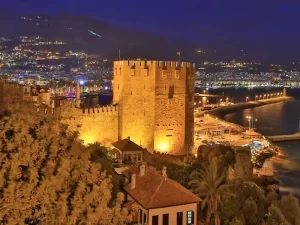
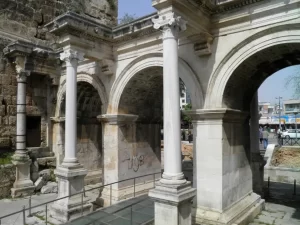
The old town, also called Antalya Kaleiçi, is situated on a cliff above the harbor. Many of the houses along the small, winding, cobblestones streets date from the Ottoman era. It seems as if time has stood still here. Hadrian’s Gate commemorates the visit of Emperor Hadrian and for a long time was the only entrance to the old town.

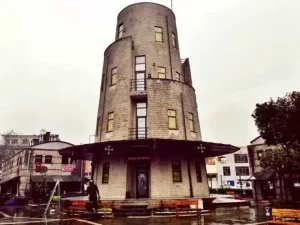
The furrowed minaret of Yivli Minare Mosque, built by the Seljuks in the 13th century, is considered a landmark of Antalya. Nearby is Saat Kulesi, the clock tower that was once part of the old city walls. The old harbor of Antalya has a very special flair with its fishing boats and yachts. If you feel like it, you can marvel at exhibits from the Paleolithic to the Ottoman Empire in the Antalya Archaeological Museum.

Antalya Dental Tourism

Start your Dental Holiday Today

The 6 Most Important Epochs in Antalya
Karain Cave
The dripstone cave, also called "Black Cave", is located almost 30 kilometers west of Antalya, 400 meters above sea level. Archaeological findings prove that Karain cave was inhabited over 40,000 years ago and was also used as a temple.
1
Antiquity in Antalya
6,000 years ago the first people settled in Perge. Thousands of years later the Hittite Empire was the first advanced civilization in Anatolia. The founder of Antalya was King Attalus II of Pergamon, around the year 158 B.C. At that time the city was named Attaleia in his honor. As the most important port in the area, the city was the naval base of Attalus huge fleet.
2
Roman Empire
Attaleia became part of the Roman Empire in 133 BC, when Attalus III, a nephew of Attalus II, bequeathed his kingdom to Rome upon his death. At that time the city was part of the Roman province of Pamphylia. The capital was Perga. Alanya was conquered by Pompeius, the rival of Julius Ceasar during the Roman Civil War. Many of the impressive ancient buildings date from the heyday of Rome, for example the theaters in Aspendos, Side, and Termessos. The Arch of Hadrian still reminds us of the visit of Emperor Hadrian in 130 AD.

3
Byzantines, Seljuks, and Medieval Times
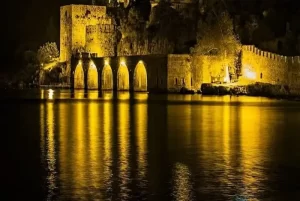
The increasingly weaker Byzantine Empire lost Antalya first to the Arabs, then to the Crusaders, and kings of Cyprus. The Seljuks, under Sultan Alaaedin Keykubat, conquered Antalya in the Middle Ages. The Sultan made Alanya his winter residence. The furrowed minaret of Yivli Minare Mosque, built by the Seljuks in the 13th century, is considered a landmark of Antalya. They built also the castle in Alanya, the Red Tower and the shipyard (Tersane).
4
Ottoman Empire
At the beginning of the 14th century Antalya came under Ottoman rule. Due to the movement of trade routes, the city lost its importance. At the end of the First World War, Italy was to receive territories from Turkey, which included Antalya. However, with the establishment of the Turkish Republic, this became obsolete.
5
Turkish Republic
Today, Antalya is the capital of the province with the same name. The city is also called the pearl of the Turkish Riviera, with 2.5 million inhabitants and booming tourism.
6

Antalya Travel Guide

EXPLORE

NIGHTLIFE

Antalya Nightlife

HISTORY

Antalya Historical Places

NATURE

Antalya Nature

ACTIVITY

Antalya Activities

EAT & DRINK

Antalya Gastronomy

Antalya Travel Guide

Once seen only as the gateway to the Turkish Riviera, Antalya is today a destination in itself. Located right on the Bay of Antalya (Antalya Körfezi), the largest city on Turkey’s western Mediterranean coastline, it is both classically beautiful and stylishly modern.

At its core is the wonderfully preserved old town district of Kaleici (literally ‘within the castle’), which offers atmospheric accommodation in finely restored Ottoman houses in its winding lanes. The old town surrounds a magnificent Roman port with cliff-top views of misty blue mountain skylines worth toasting.

Go to our travel guide and read more about Antalya