Exhibition halls in Antalya Museum
Antalya Archaeological Museum consists of 14 exhibition halls on an area of 30 square meters. The exhibits reflect the thousand-year history of Antalya. The museum is considered one of the most important museums in the world. It will take about two hours to see all the halls.
Hall of Emperors
In the hall of the emperor, there are statues of the rulers of the Roman Empire during excavations in the city of Perge. Priceless statues of the emperor, empresses and important people from the Roman period are on display for all to see. The Statue of Emperor Hadrian, the Statue of the Dancing Woman, and the Statue of the Priestess of Artemis have become popular exhibits in the hall.
Children’s hall
The children’s room displays toys that children used to play many years ago. The children’s section has a corner of a typical Anatolian bazaar. Regardless of your age, you will be interested in a walk in this section.
Hall of the gods
This is the most magnificent of the halls presented. The hall features statues of gods and demigods of Greek mythology. Zeus, Aphrodite, Apollo became the leaders of this exhibition.
Ceramic hall
Throughout human history, pottery has been the most important tool in everyday life. Another area of using ceramics is in religious ceremonies. Water and a few drops of scented oil were poured into ceramic vessels.
Mosaic hall
The mosaics depict mathematicians, orators and philosophers of the ancient period. The most stunning exhibit is the three-headed statue of Hecate.
Hall of marble portraits
This is a small area where portraits of men and women are located dating back to the 2nd century BC. The sculptures are made of marble.
Perge Theater Hall
The hall contains 17 monumental sculptures. All works in this room were found in front of the stage building of the Perge Theater. The finds were found completely broken. As a result of the earthquake, the building collapsed and many artifacts were exposed under the rubble. After two years of restoration work, they are on display in the museum.
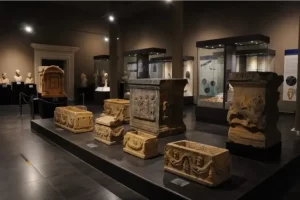
Hall of sarcophagi
It is fashionable to see various types of sarcophagi in the entrance part of the hall. Most of them were brought from the Perge necropolis. They all date from the 2nd and 3rd century BC. The second part presents sarcophagi found in the ancient cities of Patara and Limira.
Coin hall
A section of this room displays coins from the regions of Pamphylia, Pisidia and Lycia. Coins from different periods, gold jewelry, bronzes and small marble figurines. Treasures that were found during excavations. The treasure consisted of church items made of gold and silver, icons and plates.
Hall of Natural History and Prehistory
The Hall of Natural History and Prehistory features artifacts from the period of human appearance. Household items that were created for hunting and gathering food. Hand axes, scrapers, bone tools. The remains of the teeth and skeletons of Neanderthals are displayed in chronological order.
Hall of Ethnography
The hall consists of two large sections. Tiles, porcelain, religious artifacts, clocks, jewelry, locks, keys, Ottoman and Seljuk artifacts are on display.
Antalya Museum Garden
The garden displays artifacts from the Roman period, which are large in size.
It is a place where visitors can relax with pleasure. If you wish, you can have tea or coffee in the cafe. Sculptures and other works are exhibited in the open area.